
Boiler Repair Cost Southampton: When Does Ongoing Cover Make Financial Sense?
Considering boiler repair or boiler cover in Southampton? Learn how repair costs, breakdown frequency and cover terms can affect your decision.

Why you can trust our content
We understand that the boiler industry can be confusing, with plenty of outdated or misleading information. That’s why we rely only on trusted, proven sources to guide our advice and installations:



At a glance
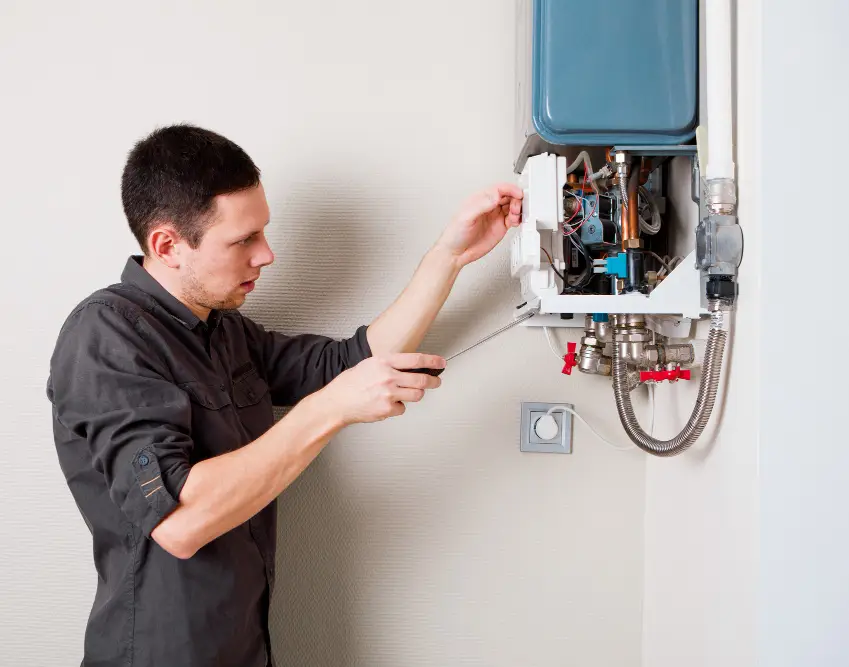
A boiler breakdown can be inconvenient at any time, but repeated faults can also make heating costs harder to predict. One repair may be relatively straightforward, while another could involve a more expensive component or several visits.
For homeowners dealing with an ageing or unreliable appliance, it is therefore useful to consider more than the price of the next repair. You may also want to understand whether ongoing boiler cover could provide a more predictable way of managing certain repair expenses.
The right approach depends on the condition of the boiler, the terms of any cover available and the likely cost of future repairs. This guide explains the factors worth considering before deciding whether repair, replacement or ongoing cover deserves further investigation.
What affects boiler repair cost?
There is no single price that applies to every boiler repair.
The final charge can depend on several factors, including:
- The type and age of the boiler
- The nature of the fault
- The component causing the problem
- Whether replacement parts are required
- How accessible the appliance is
- The time needed to diagnose and repair the fault
- Whether more than one visit is required
A simple issue may be resolved relatively quickly, while a fault involving a major component can require more extensive work.
The important point is to establish what has actually failed before deciding whether the repair represents good value for the particular appliance.
How can the age of a boiler affect repair decisions?
Age does not automatically mean that a boiler needs replacing.
A well-maintained appliance may continue operating reliably for many years, while a newer boiler can still develop an unexpected fault.
However, age can become relevant when repairs are becoming more frequent or expensive.
Consider the wider pattern rather than one isolated breakdown:
- Has the boiler required several repairs recently?
- Are faults becoming more frequent?
- Are replacement parts becoming difficult to source?
- Is the appliance still meeting the household’s heating and hot water needs?
- Would another major repair provide a reasonable expected lifespan?
These questions can help put an individual repair into context.
When is repairing the boiler likely to make sense?
Repair can be a sensible option when the fault is identifiable and the appliance remains in reasonable condition.
For example, if a relatively straightforward component has failed on an otherwise reliable boiler, repairing it may restore normal operation without requiring a full replacement.
The situation becomes less straightforward when several expensive faults occur close together.
Rather than relying on age alone, ask the heating professional to explain:
- What has failed?
- What needs to be replaced?
- What is the expected repair charge?
- Is there evidence of other developing problems?
- How does the repair compare with replacing the boiler?
This gives you information to consider rather than making the decision based on the latest invoice alone.
Could repeated repairs make boiler cover more useful?
Potentially, but it depends on the terms of the policy and your individual circumstances.
Boiler cover is designed to help with eligible repair costs under the conditions of the particular agreement. Different policies can vary considerably, so homeowners should not assume that every fault, appliance or callout will be covered.
When considering boiler cover Southampton options, check what the policy actually provides.
Important details can include:
- Monthly or annual premium
- Callout arrangements
- Excess payments
- Parts and labour coverage
- Maximum claim limits
- Boiler age restrictions
- Eligibility requirements
- Exclusions
- Waiting periods
- Conditions relating to maintenance
A policy that appears inexpensive may have limitations that affect how useful it would be when you need to make a claim.
What should you check before buying boiler cover?
The headline monthly premium is only one part of the calculation.
For example, a policy could have a relatively low monthly cost but require an excess every time you make a claim. Another policy could have a higher premium but a different excess or broader terms.
Before agreeing to cover, look at the following:
| Policy detail | Why it matters |
|---|---|
| Monthly premium | Shows your regular cost |
| Excess | Determines what you pay when claiming |
| Parts cover | Establishes which components may be included |
| Labour cover | Shows whether eligible repair labour is covered |
| Claim limits | Identifies financial limits on repairs |
| Boiler age rules | Older appliances may have restrictions |
| Waiting period | Cover may not start immediately |
| Exclusions | Explains what the policy does not cover |
| Maintenance conditions | Some policies have specific requirements |
Reading these details can help you understand what you are actually paying for.
How should you compare cover with paying for repairs yourself?
A simple comparison can help.
Start by looking at your previous repair history. If your boiler has been reliable and repairs have been infrequent, paying for occasional repairs directly may be a straightforward approach.
If the appliance has experienced repeated faults, however, you may want to investigate whether a suitable cover policy could make future eligible repair expenses easier to budget for.
The comparison should include:
- Likely annual premium
- Excess per claim
- Previous repair frequency
- Typical repair charges
- Boiler age
- Policy exclusions
- Claim limits
There is no universal point at which cover becomes financially worthwhile. It depends on the boiler and the specific policy terms.
Does boiler cover pay for every repair?
No. Cover is subject to the terms and conditions of the policy.
Certain policies may exclude particular components, pre-existing faults, boilers above a certain age or issues caused by circumstances specified in the policy.
This is particularly important if you are considering cover after a recent breakdown.
Read the agreement carefully to establish when protection begins and what circumstances are excluded. If you already know that your boiler has a fault, do not assume a new policy will cover the existing problem.
Could servicing help reduce unexpected repair problems?
Regular servicing does not guarantee that a boiler will never break down, but it can provide an opportunity for a qualified professional to inspect the appliance and identify issues that may need attention.
Servicing can also help keep the appliance operating as intended and provide an opportunity to discuss its condition.
If a boiler is becoming unreliable, ask whether there are signs of wider deterioration rather than focusing only on the current fault.
This can be particularly useful when deciding whether to keep repairing an older appliance or begin planning for replacement.
When should you consider replacement instead of another repair?
There is no fixed repair value that automatically means a boiler should be replaced.
Instead, consider the broader picture.
Replacement may become worth investigating when:
- Breakdowns are happening repeatedly
- Repair bills are becoming substantial
- Several components are showing signs of failure
- The boiler is approaching the end of its useful service life
- Replacement parts are difficult to obtain
- The appliance no longer meets the property’s needs
However, a single expensive repair does not necessarily mean replacement is the only sensible option.
A heating professional can assess the appliance and explain the available choices.
How much should you budget for future boiler repairs?
The answer depends heavily on the boiler and the faults it develops.
Rather than trying to predict one exact figure, consider your recent repair history.
For example, if you have paid for several repairs during the last year, add those costs together and compare them with the annual cost of any cover you are considering. Then factor in the policy excess, exclusions and claim limits.
This provides a more realistic comparison than looking at the monthly premium alone.
It is also worth remembering that a policy is not simply a way of reducing costs. It can provide a degree of predictability for eligible repairs, which some homeowners may value even when the financial outcome cannot be guaranteed.
What questions should you ask about boiler cover?
If you are researching boiler cover Southampton options, ask the provider:
- What exactly is covered?
- Is labour included?
- Are replacement parts included?
- What excess applies?
- Is there a claim limit?
- Is there a waiting period?
- Are older boilers eligible?
- Are existing faults excluded?
- Are there maintenance requirements?
- What happens if the boiler cannot be economically repaired?
The answers can differ significantly between policies.
Do not compare cover solely by its advertised monthly price.
How should you compare the overall cost of repair and cover?
The best comparison is based on your own circumstances.
| Consideration | Paying for repairs yourself | Boiler cover |
|---|---|---|
| Regular payment | Usually none | Monthly or annual premium |
| Repair payment | Paid when required | Eligible costs may be covered |
| Excess | Not normally applicable | May apply per claim |
| Predictability | Can vary considerably | More predictable for covered repairs |
| Policy restrictions | None | Subject to terms and exclusions |
| Long-term value | Depends on repair frequency | Depends on usage and policy terms |
The table is not intended to identify one universally better option. It simply shows why both approaches should be considered using the actual figures and terms relevant to your boiler.
Related articles
Let’s get started, Which fuel powers your boiler?
Mains Gas
LPG
At a glance
A boiler breakdown can be inconvenient at any time, but repeated faults can also make heating costs harder to predict. One repair may be relatively straightforward, while another could involve a more expensive component or several visits.
For homeowners dealing with an ageing or unreliable appliance, it is therefore useful to consider more than the price of the next repair. You may also want to understand whether ongoing boiler cover could provide a more predictable way of managing certain repair expenses.
The right approach depends on the condition of the boiler, the terms of any cover available and the likely cost of future repairs. This guide explains the factors worth considering before deciding whether repair, replacement or ongoing cover deserves further investigation.
What affects boiler repair cost?
There is no single price that applies to every boiler repair.
The final charge can depend on several factors, including:
- The type and age of the boiler
- The nature of the fault
- The component causing the problem
- Whether replacement parts are required
- How accessible the appliance is
- The time needed to diagnose and repair the fault
- Whether more than one visit is required
A simple issue may be resolved relatively quickly, while a fault involving a major component can require more extensive work.
The important point is to establish what has actually failed before deciding whether the repair represents good value for the particular appliance.
How can the age of a boiler affect repair decisions?
Age does not automatically mean that a boiler needs replacing.
A well-maintained appliance may continue operating reliably for many years, while a newer boiler can still develop an unexpected fault.
However, age can become relevant when repairs are becoming more frequent or expensive.
Consider the wider pattern rather than one isolated breakdown:
- Has the boiler required several repairs recently?
- Are faults becoming more frequent?
- Are replacement parts becoming difficult to source?
- Is the appliance still meeting the household’s heating and hot water needs?
- Would another major repair provide a reasonable expected lifespan?
These questions can help put an individual repair into context.
When is repairing the boiler likely to make sense?
Repair can be a sensible option when the fault is identifiable and the appliance remains in reasonable condition.
For example, if a relatively straightforward component has failed on an otherwise reliable boiler, repairing it may restore normal operation without requiring a full replacement.
The situation becomes less straightforward when several expensive faults occur close together.
Rather than relying on age alone, ask the heating professional to explain:
- What has failed?
- What needs to be replaced?
- What is the expected repair charge?
- Is there evidence of other developing problems?
- How does the repair compare with replacing the boiler?
This gives you information to consider rather than making the decision based on the latest invoice alone.
Could repeated repairs make boiler cover more useful?
Potentially, but it depends on the terms of the policy and your individual circumstances.
Boiler cover is designed to help with eligible repair costs under the conditions of the particular agreement. Different policies can vary considerably, so homeowners should not assume that every fault, appliance or callout will be covered.
When considering boiler cover Southampton options, check what the policy actually provides.
Important details can include:
- Monthly or annual premium
- Callout arrangements
- Excess payments
- Parts and labour coverage
- Maximum claim limits
- Boiler age restrictions
- Eligibility requirements
- Exclusions
- Waiting periods
- Conditions relating to maintenance
A policy that appears inexpensive may have limitations that affect how useful it would be when you need to make a claim.
What should you check before buying boiler cover?
The headline monthly premium is only one part of the calculation.
For example, a policy could have a relatively low monthly cost but require an excess every time you make a claim. Another policy could have a higher premium but a different excess or broader terms.
Before agreeing to cover, look at the following:
| Policy detail | Why it matters |
|---|---|
| Monthly premium | Shows your regular cost |
| Excess | Determines what you pay when claiming |
| Parts cover | Establishes which components may be included |
| Labour cover | Shows whether eligible repair labour is covered |
| Claim limits | Identifies financial limits on repairs |
| Boiler age rules | Older appliances may have restrictions |
| Waiting period | Cover may not start immediately |
| Exclusions | Explains what the policy does not cover |
| Maintenance conditions | Some policies have specific requirements |
Reading these details can help you understand what you are actually paying for.
How should you compare cover with paying for repairs yourself?
A simple comparison can help.
Start by looking at your previous repair history. If your boiler has been reliable and repairs have been infrequent, paying for occasional repairs directly may be a straightforward approach.
If the appliance has experienced repeated faults, however, you may want to investigate whether a suitable cover policy could make future eligible repair expenses easier to budget for.
The comparison should include:
- Likely annual premium
- Excess per claim
- Previous repair frequency
- Typical repair charges
- Boiler age
- Policy exclusions
- Claim limits
There is no universal point at which cover becomes financially worthwhile. It depends on the boiler and the specific policy terms.
Does boiler cover pay for every repair?
No. Cover is subject to the terms and conditions of the policy.
Certain policies may exclude particular components, pre-existing faults, boilers above a certain age or issues caused by circumstances specified in the policy.
This is particularly important if you are considering cover after a recent breakdown.
Read the agreement carefully to establish when protection begins and what circumstances are excluded. If you already know that your boiler has a fault, do not assume a new policy will cover the existing problem.
Could servicing help reduce unexpected repair problems?
Regular servicing does not guarantee that a boiler will never break down, but it can provide an opportunity for a qualified professional to inspect the appliance and identify issues that may need attention.
Servicing can also help keep the appliance operating as intended and provide an opportunity to discuss its condition.
If a boiler is becoming unreliable, ask whether there are signs of wider deterioration rather than focusing only on the current fault.
This can be particularly useful when deciding whether to keep repairing an older appliance or begin planning for replacement.
When should you consider replacement instead of another repair?
There is no fixed repair value that automatically means a boiler should be replaced.
Instead, consider the broader picture.
Replacement may become worth investigating when:
- Breakdowns are happening repeatedly
- Repair bills are becoming substantial
- Several components are showing signs of failure
- The boiler is approaching the end of its useful service life
- Replacement parts are difficult to obtain
- The appliance no longer meets the property’s needs
However, a single expensive repair does not necessarily mean replacement is the only sensible option.
A heating professional can assess the appliance and explain the available choices.
How much should you budget for future boiler repairs?
The answer depends heavily on the boiler and the faults it develops.
Rather than trying to predict one exact figure, consider your recent repair history.
For example, if you have paid for several repairs during the last year, add those costs together and compare them with the annual cost of any cover you are considering. Then factor in the policy excess, exclusions and claim limits.
This provides a more realistic comparison than looking at the monthly premium alone.
It is also worth remembering that a policy is not simply a way of reducing costs. It can provide a degree of predictability for eligible repairs, which some homeowners may value even when the financial outcome cannot be guaranteed.
What questions should you ask about boiler cover?
If you are researching boiler cover Southampton options, ask the provider:
- What exactly is covered?
- Is labour included?
- Are replacement parts included?
- What excess applies?
- Is there a claim limit?
- Is there a waiting period?
- Are older boilers eligible?
- Are existing faults excluded?
- Are there maintenance requirements?
- What happens if the boiler cannot be economically repaired?
The answers can differ significantly between policies.
Do not compare cover solely by its advertised monthly price.
How should you compare the overall cost of repair and cover?
The best comparison is based on your own circumstances.
| Consideration | Paying for repairs yourself | Boiler cover |
|---|---|---|
| Regular payment | Usually none | Monthly or annual premium |
| Repair payment | Paid when required | Eligible costs may be covered |
| Excess | Not normally applicable | May apply per claim |
| Predictability | Can vary considerably | More predictable for covered repairs |
| Policy restrictions | None | Subject to terms and exclusions |
| Long-term value | Depends on repair frequency | Depends on usage and policy terms |
The table is not intended to identify one universally better option. It simply shows why both approaches should be considered using the actual figures and terms relevant to your boiler.