
Boiler Repair Cost vs Boiler Cover Southampton: Which Route Fits Your Situation?
Compare boiler repair costs with boiler cover in Southampton to understand the benefits, exclusions and costs of each option and choose the right solution for your home.

Why you can trust our content
We understand that the boiler industry can be confusing, with plenty of outdated or misleading information. That’s why we rely only on trusted, proven sources to guide our advice and installations:



At a glance
When a boiler develops a fault, homeowners usually have two broad ways of dealing with the financial risk. You can pay for repairs when problems occur, or you can choose a boiler cover plan designed to provide certain types of support for a regular payment.
Neither approach is automatically right for every household. The better fit depends on the age and condition of your boiler, how predictable you want your heating costs to be, what a particular cover plan includes and how comfortable you are paying for unexpected repairs yourself.
What does paying for repairs as needed actually mean?
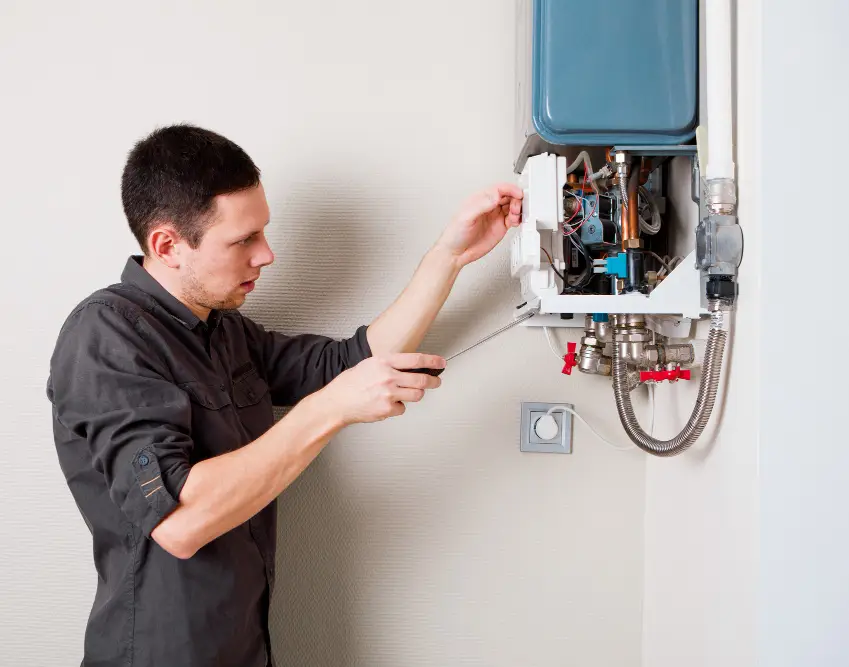
The pay-as-you-go approach is straightforward. If the boiler develops a fault, you arrange an engineer visit and pay for the diagnosis, labour and any required parts according to the work carried out.
If the boiler remains reliable for a long period, you may go months or years without needing to pay for a significant repair. The disadvantage is that when a breakdown does occur, the cost arrives unexpectedly.
Your eventual boiler repair cost can depend on several factors, including:
- The fault involved
- The component that needs attention
- Whether parts are readily available
- The amount of labour required
- Whether more than one issue is present
- The general condition of the appliance
This route can suit homeowners who prefer not to make regular payments for cover and are comfortable budgeting for occasional repair bills themselves.
If your boiler has developed a fault, contact Heatworks UK for an assessment so you can understand the problem before deciding on the next step.
How does boiler cover work?
Boiler cover generally involves making a regular payment in return for the protection described within a particular plan.
The important phrase is “described within the plan”. Cover can vary considerably between providers and packages, so homeowners should never assume that every fault, part or call-out will automatically be included.
Before choosing boiler cover Southampton homeowners should check the actual terms carefully, including:
- What equipment is covered
- Which types of faults are included
- Whether labour is included
- Whether replacement parts are covered
- Whether an excess applies
- Whether there are claim limits
- Whether servicing is included
- Whether the age of the boiler affects eligibility
- Whether any waiting period applies
- Which exclusions are listed
The value of the plan therefore depends on much more than the monthly or annual price.
Repair as needed vs boiler cover
The two routes approach boiler costs differently.
| Factor | Pay for repairs when needed | Boiler cover |
| Regular payment | Usually none | Regular premium or payment |
| Unexpected bills | Possible when faults occur | May be reduced for covered faults |
| What is included | You pay for agreed work | Depends on plan terms |
| Flexibility | Arrange repair when required | Usually follows provider’s cover process |
| Suitability | Can work well with reliable boilers | Can appeal to those wanting predictable budgeting |
| Exclusions | Not applicable in the same way | Plans can contain exclusions and limits |
| Servicing | Usually arranged separately | May or may not be included |
The key is not deciding which column looks better generally. It is deciding which arrangement better reflects your boiler, finances and preference for managing risk.
Does the age of your boiler change the decision?
It can.
An older boiler may have a greater repair history than a recently installed appliance, although age alone does not tell you how reliable it will be.
Before deciding between cover and paying for faults individually, look at the history of the appliance.
Ask yourself:
- How many repairs has it needed recently?
- Are the same problems returning?
- Have repair bills started increasing?
- Are replacement parts still easy to source?
- Has an engineer raised concerns about its overall condition?
- Are you likely to replace the boiler soon anyway?
A relatively reliable boiler with little repair history creates a different decision from an appliance that has required several call-outs in the past two winters.
When can paying for individual repairs make sense?
Paying as problems arise may appeal if your boiler is dependable and you would rather keep control of when money is spent.
For example, a homeowner with a boiler that has operated without significant problems for several years may decide that putting money aside for possible repairs suits them better than paying continuously for protection they might not use.
It can also make sense if you are already planning to replace the appliance in the near future and do not want to enter a new arrangement without first checking its terms.
However, the approach requires some financial flexibility. A breakdown rarely happens at a convenient time, and the boiler repair cost may arrive alongside other household expenses.
[CTA 2]
If you are unsure whether another repair is worthwhile on your current boiler, speak to Heatworks UK about its condition and recent repair history before committing further money.
When might boiler cover suit a household better?
Some homeowners value predictability more than the possibility of saving money by avoiding regular payments.
Cover can provide a clearer ongoing household expense, provided the faults you are concerned about are actually included under the policy or service agreement.
It may be worth considering if:
- You prefer regular predictable payments
- An unexpected repair bill would be difficult to absorb
- You want an established process for arranging covered repairs
- The plan includes services you would otherwise pay for separately
- The included protection matches the risks you want covered
But cover should not be chosen simply because the monthly figure looks small.
The total annual cost, exclusions, excesses and limits should all be considered before you decide whether the protection offers useful value for your circumstances.
What should you check before choosing a cover plan?
Read beyond the headline benefits.
Two boiler cover products with similar prices may provide significantly different levels of protection. One may include particular components or servicing arrangements that another excludes.
Before signing up, check:
What counts as a covered breakdown?
Look at the definition of a fault and whether particular components are excluded.
Is there an excess?
Some arrangements may require you to pay an amount towards each claim or repair.
Are there repair or claim limits?
Check whether there are financial limits, maximum numbers of claims or other restrictions.
Does the boiler’s age matter?
Some providers may have eligibility conditions relating to the age, condition or service history of the appliance.
Is annual servicing included?
Do not assume that cover automatically includes servicing. Confirm exactly what the plan provides.
What happens if the boiler cannot be repaired?
Check whether the agreement offers any contribution towards replacement or simply ends once repair is no longer practical.
Understanding these details helps you compare the real protection rather than the marketing headline.
Should you consider replacing the boiler instead?
Sometimes the more important decision is not repair versus cover at all.
If your boiler is breaking down repeatedly, becoming expensive to maintain or approaching the point where parts are difficult to obtain, it may be worth comparing continued spending with replacement.
Consider the cumulative picture.
Imagine you have paid for several repairs recently and are now looking at another annual cover payment. That combined spending may change how you view the existing boiler.
Replacement does involve a larger upfront cost, but it may deserve consideration if the current appliance is becoming consistently unreliable.
Related articles
Let’s get started, Which fuel powers your boiler?
Mains Gas
LPG
At a glance
When a boiler develops a fault, homeowners usually have two broad ways of dealing with the financial risk. You can pay for repairs when problems occur, or you can choose a boiler cover plan designed to provide certain types of support for a regular payment.
Neither approach is automatically right for every household. The better fit depends on the age and condition of your boiler, how predictable you want your heating costs to be, what a particular cover plan includes and how comfortable you are paying for unexpected repairs yourself.
What does paying for repairs as needed actually mean?
The pay-as-you-go approach is straightforward. If the boiler develops a fault, you arrange an engineer visit and pay for the diagnosis, labour and any required parts according to the work carried out.
If the boiler remains reliable for a long period, you may go months or years without needing to pay for a significant repair. The disadvantage is that when a breakdown does occur, the cost arrives unexpectedly.
Your eventual boiler repair cost can depend on several factors, including:
- The fault involved
- The component that needs attention
- Whether parts are readily available
- The amount of labour required
- Whether more than one issue is present
- The general condition of the appliance
This route can suit homeowners who prefer not to make regular payments for cover and are comfortable budgeting for occasional repair bills themselves.
If your boiler has developed a fault, contact Heatworks UK for an assessment so you can understand the problem before deciding on the next step.
How does boiler cover work?
Boiler cover generally involves making a regular payment in return for the protection described within a particular plan.
The important phrase is “described within the plan”. Cover can vary considerably between providers and packages, so homeowners should never assume that every fault, part or call-out will automatically be included.
Before choosing boiler cover Southampton homeowners should check the actual terms carefully, including:
- What equipment is covered
- Which types of faults are included
- Whether labour is included
- Whether replacement parts are covered
- Whether an excess applies
- Whether there are claim limits
- Whether servicing is included
- Whether the age of the boiler affects eligibility
- Whether any waiting period applies
- Which exclusions are listed
The value of the plan therefore depends on much more than the monthly or annual price.
Repair as needed vs boiler cover
The two routes approach boiler costs differently.
| Factor | Pay for repairs when needed | Boiler cover |
| Regular payment | Usually none | Regular premium or payment |
| Unexpected bills | Possible when faults occur | May be reduced for covered faults |
| What is included | You pay for agreed work | Depends on plan terms |
| Flexibility | Arrange repair when required | Usually follows provider’s cover process |
| Suitability | Can work well with reliable boilers | Can appeal to those wanting predictable budgeting |
| Exclusions | Not applicable in the same way | Plans can contain exclusions and limits |
| Servicing | Usually arranged separately | May or may not be included |
The key is not deciding which column looks better generally. It is deciding which arrangement better reflects your boiler, finances and preference for managing risk.
Does the age of your boiler change the decision?
It can.
An older boiler may have a greater repair history than a recently installed appliance, although age alone does not tell you how reliable it will be.
Before deciding between cover and paying for faults individually, look at the history of the appliance.
Ask yourself:
- How many repairs has it needed recently?
- Are the same problems returning?
- Have repair bills started increasing?
- Are replacement parts still easy to source?
- Has an engineer raised concerns about its overall condition?
- Are you likely to replace the boiler soon anyway?
A relatively reliable boiler with little repair history creates a different decision from an appliance that has required several call-outs in the past two winters.
When can paying for individual repairs make sense?
Paying as problems arise may appeal if your boiler is dependable and you would rather keep control of when money is spent.
For example, a homeowner with a boiler that has operated without significant problems for several years may decide that putting money aside for possible repairs suits them better than paying continuously for protection they might not use.
It can also make sense if you are already planning to replace the appliance in the near future and do not want to enter a new arrangement without first checking its terms.
However, the approach requires some financial flexibility. A breakdown rarely happens at a convenient time, and the boiler repair cost may arrive alongside other household expenses.
[CTA 2]
If you are unsure whether another repair is worthwhile on your current boiler, speak to Heatworks UK about its condition and recent repair history before committing further money.
When might boiler cover suit a household better?
Some homeowners value predictability more than the possibility of saving money by avoiding regular payments.
Cover can provide a clearer ongoing household expense, provided the faults you are concerned about are actually included under the policy or service agreement.
It may be worth considering if:
- You prefer regular predictable payments
- An unexpected repair bill would be difficult to absorb
- You want an established process for arranging covered repairs
- The plan includes services you would otherwise pay for separately
- The included protection matches the risks you want covered
But cover should not be chosen simply because the monthly figure looks small.
The total annual cost, exclusions, excesses and limits should all be considered before you decide whether the protection offers useful value for your circumstances.
What should you check before choosing a cover plan?
Read beyond the headline benefits.
Two boiler cover products with similar prices may provide significantly different levels of protection. One may include particular components or servicing arrangements that another excludes.
Before signing up, check:
What counts as a covered breakdown?
Look at the definition of a fault and whether particular components are excluded.
Is there an excess?
Some arrangements may require you to pay an amount towards each claim or repair.
Are there repair or claim limits?
Check whether there are financial limits, maximum numbers of claims or other restrictions.
Does the boiler’s age matter?
Some providers may have eligibility conditions relating to the age, condition or service history of the appliance.
Is annual servicing included?
Do not assume that cover automatically includes servicing. Confirm exactly what the plan provides.
What happens if the boiler cannot be repaired?
Check whether the agreement offers any contribution towards replacement or simply ends once repair is no longer practical.
Understanding these details helps you compare the real protection rather than the marketing headline.
Should you consider replacing the boiler instead?
Sometimes the more important decision is not repair versus cover at all.
If your boiler is breaking down repeatedly, becoming expensive to maintain or approaching the point where parts are difficult to obtain, it may be worth comparing continued spending with replacement.
Consider the cumulative picture.
Imagine you have paid for several repairs recently and are now looking at another annual cover payment. That combined spending may change how you view the existing boiler.
Replacement does involve a larger upfront cost, but it may deserve consideration if the current appliance is becoming consistently unreliable.