
Gas Boiler Installation Southampton: What Should a Professional Installation Include?
Replacing a gas boiler involves more than choosing a new appliance. A professional installation should include a thorough property survey, suitable system design, careful fitting, safety checks, commissioning and a clear handover. This guide explains what homeowners in Southampton should expect from a gas boiler installation and what to check before choosing an installer or approving a quotation.

Why you can trust our content
We understand that the boiler industry can be confusing, with plenty of outdated or misleading information. That’s why we rely only on trusted, proven sources to guide our advice and installations:



At a glance
Choosing a new gas boiler is only one part of replacing your heating system. The quality of the survey, preparation, fitting, testing and final handover can matter just as much as the appliance itself.
For homeowners arranging a gas boiler installation in Southampton, a professional service should follow a clear process from the first assessment to the final checks. Understanding what should be included makes it easier to compare quotations, ask useful questions and avoid choosing an installer based on price alone.
What should happen before the installation begins?
A professional installation should start with an assessment of the existing heating system and the property.
The installer needs enough information to determine whether the proposed boiler is suitable, where it can be fitted and whether any changes are needed to the current setup. A proper survey also helps identify work that could otherwise appear unexpectedly once the old boiler has been removed.
The assessment may consider:
- Existing boiler type and position
- Property size and heating requirements
- Hot water demand
- Number of bathrooms
- Existing pipework
- Radiators and heating controls
- Gas supply
- Flue position
- Condensate drainage
- Access around the proposed installation area
The installer should also discuss what you expect from the new system rather than simply replacing the current appliance with the nearest equivalent.
If you are planning a replacement, contact Heatworks UK to arrange an assessment and discuss the most suitable installation approach for your home.
Should the installer explain the proposed boiler and system design?
Yes. Before work starts, you should understand what boiler is being recommended and why.
A professional installer should be able to explain how the appliance suits your heating and hot water requirements. If changes to the existing system are recommended, those should also be discussed before you agree to the work.
You may want to ask:
- Why has this particular boiler been recommended?
- Is the boiler staying in the same position?
- Will any pipework need altering?
- Are new heating controls included?
- Does the flue arrangement need changing?
- Will any existing components be removed?
- How long should the installation take?
A reputable gas boiler installation company should make the scope understandable rather than expecting you to accept a technical specification without explanation.
What should be included in the quotation?
A professional quotation should give you enough detail to understand what you are paying for.
The exact content will depend on the property, but a useful quote should normally identify the major parts of the project rather than providing only one unexplained figure.
| Installation item | What you should check |
| New boiler | Make, model and relevant specification |
| Labour | Removal, fitting and commissioning |
| Controls | Whether new thermostats or heating controls are included |
| Pipework | Any known alterations required |
| Flue | Whether existing arrangements can remain or need changing |
| Condensate | How drainage will be handled |
| System work | Any cleaning, treatment or related preparation |
| Old boiler | Whether removal and disposal are included |
| Handover | Testing, instructions and relevant paperwork |
If one quote is significantly lower than another, check whether the same work is actually included in both.
What happens when the old boiler is removed?
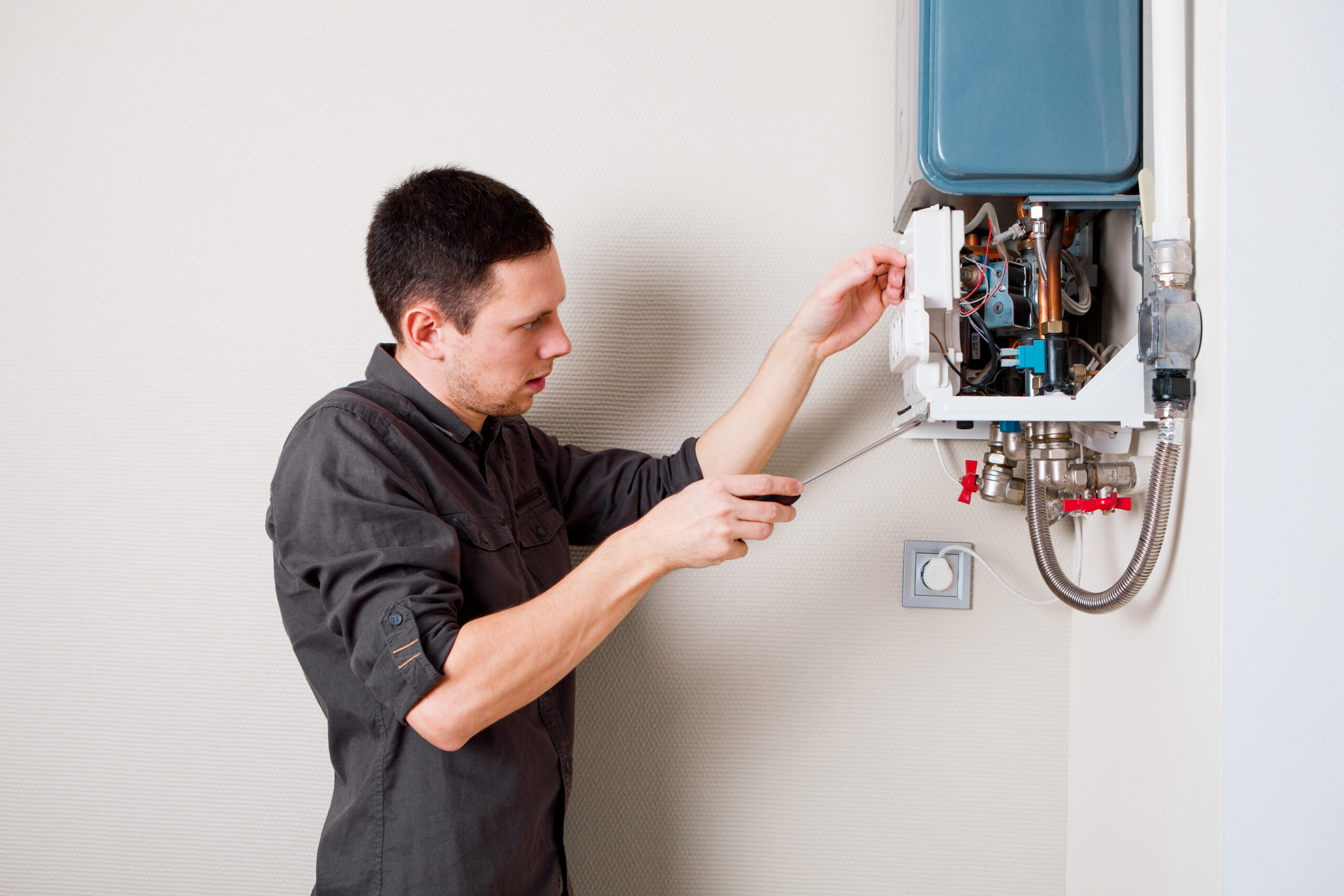
On installation day, the engineer will normally begin by protecting the work area and isolating the existing system.
The old appliance can then be disconnected and removed so the new installation can begin. Depending on the project, some existing connections may remain suitable, while others may need adjusting or replacing.
The amount of work depends heavily on whether the job is a straightforward replacement or a more involved change.
For example, moving the boiler to another room could require additional:
- Pipework
- Flue work
- Condensate routing
- Making good
- Access preparation
These details should ideally have been identified during the survey.
Which safety checks should form part of the work?
Gas boiler work should be approached as a safety-critical installation rather than simply another home improvement project.
Gas work in the UK must be carried out by an appropriately qualified Gas Safe registered engineer. Homeowners can check an engineer’s registration and the categories of gas work they are qualified to carry out through the Gas Safe Register.
During the installation and commissioning process, the engineer will carry out checks relevant to the appliance and system. These can include checking gas connections, the flue arrangement, combustion performance and safe operation.
Professional workmanship also means following the boiler manufacturer’s installation requirements rather than treating every appliance in exactly the same way.
If you would like to understand what is included before booking your installation, speak to Heatworks UK and ask for the proposed work to be clearly explained.
Should the existing heating system be checked too?
Yes. A boiler operates as part of a wider heating system, so the installation should not focus on the appliance alone.
The installer may need to consider the condition of the pipework, radiators, circulation and system water. Existing issues should be identified where possible so they do not undermine the performance of the replacement boiler.
For homeowners comparing gas boiler installation Southampton options, this is an important point. Two quotes can include the same boiler but a very different level of preparation and system work.
Ask whether the quotation includes any required system treatment and what checks will be carried out before the new appliance is commissioned.
Why are controls an important part of the installation?
A new boiler still needs suitable controls to operate effectively.
Your installation may include a thermostat, programmer or other heating controls depending on the system. The installer should explain what is being fitted and how it will allow you to control heating times and temperatures.
More importantly, the handover should show you how to use those controls.
A technically sound installation is less useful if the homeowner finishes the job unsure how to:
- Turn the heating on and off
- Adjust the temperature
- Change heating schedules
- Use hot water controls where applicable
- Recognise basic system information
This should be part of the final explanation rather than something you have to work out afterwards.
What does commissioning actually mean?
Commissioning is the process of checking that the newly installed boiler and heating system are operating correctly before the job is considered complete.
It is more than simply turning the boiler on and seeing whether the radiators become warm.
The engineer should carry out the relevant checks for the appliance and system, making sure the installation operates safely and as intended. Any required adjustments should be completed before the boiler is handed over to you.
This is one reason choosing a professional gas boiler installation company matters. The installation is not finished when the boiler is physically attached to the wall. Testing and commissioning form part of the job.
What paperwork and handover should you receive?
The final handover should give you both practical information and the relevant documentation associated with the new appliance.
Exactly what you receive will depend on the installation, but you should expect the engineer to explain:
- How to operate the boiler
- How to use the heating controls
- Basic pressure information where relevant
- What to do if a fault appears
- Warranty arrangements
- Servicing requirements
- Who to contact if you have a question after installation
The appropriate installation and compliance documentation should also be completed.
Keep manuals, warranty information and installation documents somewhere accessible. They may be useful for future servicing, maintenance or if you sell the property.
What should you check before the installer leaves?
Do not feel rushed through the final handover. This is your opportunity to make sure you understand the system.
Before the engineer leaves, check that:
- Heating is operating correctly
- Hot water is working as expected
- You know how to use the controls
- You understand basic system operation
- Manuals and relevant documentation have been provided
- Warranty arrangements have been explained
- You know who to contact with any follow-up questions
- The work area has been left tidy
If something is unclear, ask while the engineer is still there.
Related articles


Let’s get started, Which fuel powers your boiler?
Mains Gas
LPG
At a glance
Choosing a new gas boiler is only one part of replacing your heating system. The quality of the survey, preparation, fitting, testing and final handover can matter just as much as the appliance itself.
For homeowners arranging a gas boiler installation in Southampton, a professional service should follow a clear process from the first assessment to the final checks. Understanding what should be included makes it easier to compare quotations, ask useful questions and avoid choosing an installer based on price alone.
What should happen before the installation begins?
A professional installation should start with an assessment of the existing heating system and the property.
The installer needs enough information to determine whether the proposed boiler is suitable, where it can be fitted and whether any changes are needed to the current setup. A proper survey also helps identify work that could otherwise appear unexpectedly once the old boiler has been removed.
The assessment may consider:
- Existing boiler type and position
- Property size and heating requirements
- Hot water demand
- Number of bathrooms
- Existing pipework
- Radiators and heating controls
- Gas supply
- Flue position
- Condensate drainage
- Access around the proposed installation area
The installer should also discuss what you expect from the new system rather than simply replacing the current appliance with the nearest equivalent.
If you are planning a replacement, contact Heatworks UK to arrange an assessment and discuss the most suitable installation approach for your home.
Should the installer explain the proposed boiler and system design?
Yes. Before work starts, you should understand what boiler is being recommended and why.
A professional installer should be able to explain how the appliance suits your heating and hot water requirements. If changes to the existing system are recommended, those should also be discussed before you agree to the work.
You may want to ask:
- Why has this particular boiler been recommended?
- Is the boiler staying in the same position?
- Will any pipework need altering?
- Are new heating controls included?
- Does the flue arrangement need changing?
- Will any existing components be removed?
- How long should the installation take?
A reputable gas boiler installation company should make the scope understandable rather than expecting you to accept a technical specification without explanation.
What should be included in the quotation?
A professional quotation should give you enough detail to understand what you are paying for.
The exact content will depend on the property, but a useful quote should normally identify the major parts of the project rather than providing only one unexplained figure.
| Installation item | What you should check |
| New boiler | Make, model and relevant specification |
| Labour | Removal, fitting and commissioning |
| Controls | Whether new thermostats or heating controls are included |
| Pipework | Any known alterations required |
| Flue | Whether existing arrangements can remain or need changing |
| Condensate | How drainage will be handled |
| System work | Any cleaning, treatment or related preparation |
| Old boiler | Whether removal and disposal are included |
| Handover | Testing, instructions and relevant paperwork |
If one quote is significantly lower than another, check whether the same work is actually included in both.
What happens when the old boiler is removed?
On installation day, the engineer will normally begin by protecting the work area and isolating the existing system.
The old appliance can then be disconnected and removed so the new installation can begin. Depending on the project, some existing connections may remain suitable, while others may need adjusting or replacing.
The amount of work depends heavily on whether the job is a straightforward replacement or a more involved change.
For example, moving the boiler to another room could require additional:
- Pipework
- Flue work
- Condensate routing
- Making good
- Access preparation
These details should ideally have been identified during the survey.
Which safety checks should form part of the work?
Gas boiler work should be approached as a safety-critical installation rather than simply another home improvement project.
Gas work in the UK must be carried out by an appropriately qualified Gas Safe registered engineer. Homeowners can check an engineer’s registration and the categories of gas work they are qualified to carry out through the Gas Safe Register.
During the installation and commissioning process, the engineer will carry out checks relevant to the appliance and system. These can include checking gas connections, the flue arrangement, combustion performance and safe operation.
Professional workmanship also means following the boiler manufacturer’s installation requirements rather than treating every appliance in exactly the same way.
If you would like to understand what is included before booking your installation, speak to Heatworks UK and ask for the proposed work to be clearly explained.
Should the existing heating system be checked too?
Yes. A boiler operates as part of a wider heating system, so the installation should not focus on the appliance alone.
The installer may need to consider the condition of the pipework, radiators, circulation and system water. Existing issues should be identified where possible so they do not undermine the performance of the replacement boiler.
For homeowners comparing gas boiler installation Southampton options, this is an important point. Two quotes can include the same boiler but a very different level of preparation and system work.
Ask whether the quotation includes any required system treatment and what checks will be carried out before the new appliance is commissioned.
Why are controls an important part of the installation?
A new boiler still needs suitable controls to operate effectively.
Your installation may include a thermostat, programmer or other heating controls depending on the system. The installer should explain what is being fitted and how it will allow you to control heating times and temperatures.
More importantly, the handover should show you how to use those controls.
A technically sound installation is less useful if the homeowner finishes the job unsure how to:
- Turn the heating on and off
- Adjust the temperature
- Change heating schedules
- Use hot water controls where applicable
- Recognise basic system information
This should be part of the final explanation rather than something you have to work out afterwards.
What does commissioning actually mean?
Commissioning is the process of checking that the newly installed boiler and heating system are operating correctly before the job is considered complete.
It is more than simply turning the boiler on and seeing whether the radiators become warm.
The engineer should carry out the relevant checks for the appliance and system, making sure the installation operates safely and as intended. Any required adjustments should be completed before the boiler is handed over to you.
This is one reason choosing a professional gas boiler installation company matters. The installation is not finished when the boiler is physically attached to the wall. Testing and commissioning form part of the job.
What paperwork and handover should you receive?
The final handover should give you both practical information and the relevant documentation associated with the new appliance.
Exactly what you receive will depend on the installation, but you should expect the engineer to explain:
- How to operate the boiler
- How to use the heating controls
- Basic pressure information where relevant
- What to do if a fault appears
- Warranty arrangements
- Servicing requirements
- Who to contact if you have a question after installation
The appropriate installation and compliance documentation should also be completed.
Keep manuals, warranty information and installation documents somewhere accessible. They may be useful for future servicing, maintenance or if you sell the property.
What should you check before the installer leaves?
Do not feel rushed through the final handover. This is your opportunity to make sure you understand the system.
Before the engineer leaves, check that:
- Heating is operating correctly
- Hot water is working as expected
- You know how to use the controls
- You understand basic system operation
- Manuals and relevant documentation have been provided
- Warranty arrangements have been explained
- You know who to contact with any follow-up questions
- The work area has been left tidy
If something is unclear, ask while the engineer is still there.